Review of Vision and Medical History
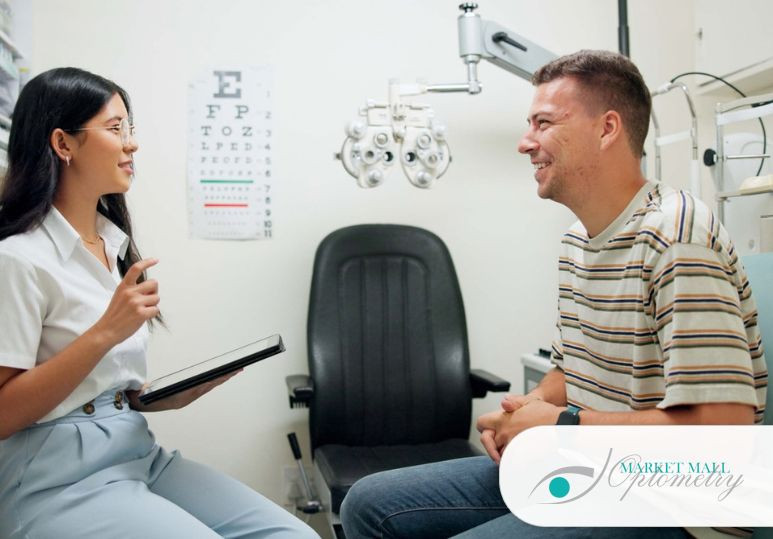
Every appointment begins with a conversation. During adult eye exams, your optometrist reviews your medical history, medications, lifestyle habits, and any recent vision concerns. Conditions such as diabetes, high blood pressure, autoimmune disorders, and family history of eye disease are important factors in assessing risk.
You may be asked about headaches, digital eye strain, dryness, difficulty driving at night, or changes in clarity. Even subtle symptoms provide valuable insight. This discussion helps tailor the eye exam patients receive to their individual needs rather than using a one-size-fits-all approach.
Understanding daily visual demands such as screen time, reading, driving, or detailed work also allows the optometrist to evaluate how well your current prescription supports your lifestyle.
Vision Testing and Prescription Assessment
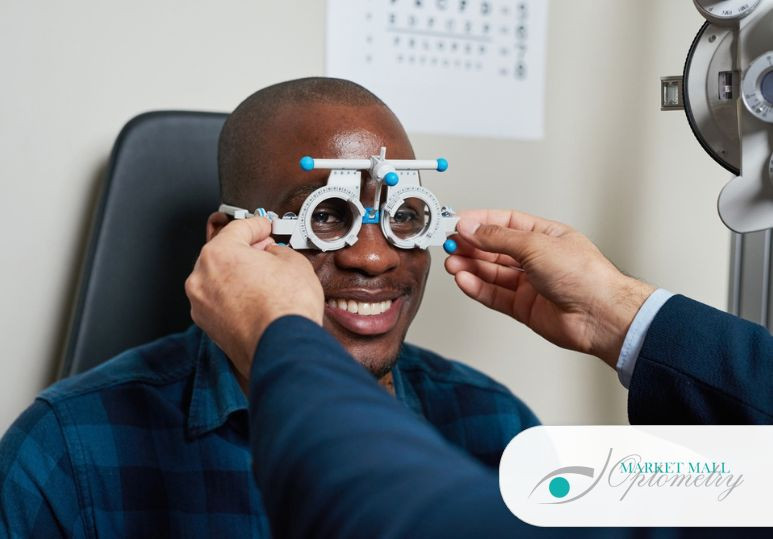
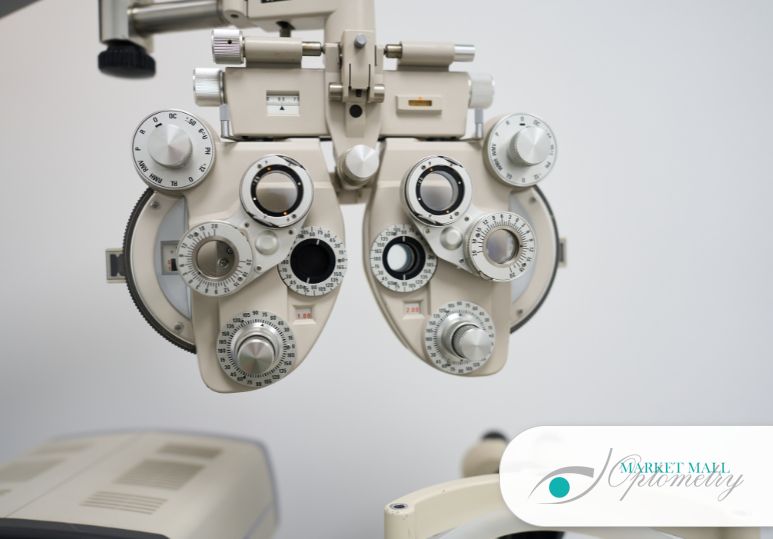
The next stage of comprehensive eye exam clinics focuses on visual acuity and prescription accuracy. You will read letters from a chart at various distances while different lenses are placed in front of your eyes. This determines whether your glasses or contact lens prescription requires updating.
Beyond clarity testing, your optometrist may assess eye coordination, focusing ability, and depth perception. Small imbalances can contribute to fatigue, headaches, or blurred vision. A complete routine eye exam appointment evaluates how both eyes work together, not just how clearly each eye sees independently.
For contact lens wearers, additional measurements may be taken to ensure proper fit and corneal health. If you experience dryness or irritation, tear film quality may also be assessed. These steps ensure comfort and long-term safety.
Prescription changes are discussed clearly, along with recommendations tailored to your daily activities. Whether you need computer lenses, progressive lenses, or updated contacts, the goal is optimized visual performance.
Eye Health Evaluation and Advanced Screening
A critical component of an optometrist's eye exam schedule is the internal eye health assessment. This includes measuring eye pressure to screen for glaucoma, examining the optic nerve, and evaluating the retina for early signs of disease.
Retinal imaging or dilation may be used to obtain a detailed view of internal structures. These tools allow early detection of macular degeneration, diabetic retinopathy, retinal tears, and vascular changes. Many of these conditions develop silently, without pain or noticeable symptoms.
Peripheral vision testing may also be conducted to identify subtle field loss. This is particularly important for detecting glaucoma progression.
Your optometrist may shine a light into your eyes to assess pupil response and evaluate eye movement. These neurological checks ensure proper communication between the eyes and brain.
In some cases, additional diagnostic technology is used to capture high-resolution images of the retina or optic nerve. Comparing these images year after year helps identify even minor structural changes. Preventive monitoring during eye exams supports early intervention and reduces long-term risk.
Once testing is complete, your optometrist reviews the findings with you. If everything appears healthy, you gain reassurance and a clear timeline for your next visit. If early changes are detected, treatment or monitoring plans are discussed promptly.
An eye exam is typically efficient, comfortable, and non-invasive. Most appointments are completed within a manageable timeframe, making preventative care easy to maintain.
Understanding what happens during an adult eye exam helps remove uncertainty. The visit is not simply about reading letters on a chart; it is a comprehensive health evaluation designed to protect sight for years to come.
Routine scheduling of comprehensive eye exams clinics offer ensures early detection, accurate prescriptions, and peace of mind. Protecting your vision begins with consistent, informed care.
FAQs
Q: HOW LONG DOES AN ADULT EYE EXAM TAKE?
A: Most adult eye exams take approximately 30 to 60 minutes, depending on the tests required and whether additional imaging is needed.
Q: DO I NEED DILATION DURING EVERY VISIT?
A: Not always. Dilation is recommended when a more detailed retinal examination is necessary. Your optometrist will determine if it is appropriate for your appointment.
Q: CAN AN EYE EXAM DETECT OTHER HEALTH CONDITIONS?
A: Yes. Eye exams can reveal early signs of diabetes, high blood pressure, autoimmune disorders, and other systemic health concerns through changes visible in the retina and blood vessels.