WHAT HAPPENS AT THE START OF THE EXAM?
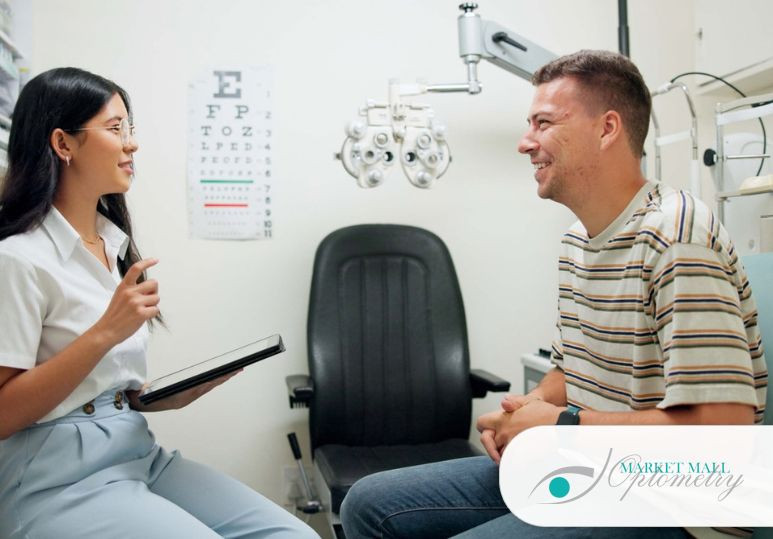
A comprehensive eye exam begins with a discussion about your vision, eye health, and daily routine. The optometrist may ask whether you have noticed blurred vision, headaches, eye strain, dryness, glare, flashes, floaters, difficulty seeing at night, or changes in how your eyes feel. These details help guide the testing and identify concerns that may not appear during a basic vision check.
Your personal and family health history also matters. Conditions such as diabetes, high blood pressure, autoimmune disease, and thyroid disorders can affect the eyes. A family history of glaucoma, macular degeneration, or retinal disease may mean your eyes should be monitored more closely. The optometrist may also ask about medications because some prescriptions can affect focusing, tear production, eye pressure, or vision.
The exam usually includes visual acuity testing. You will read letters from an eye chart at different distances while each eye is tested separately. This shows how clearly you can see and whether one eye performs differently from the other.
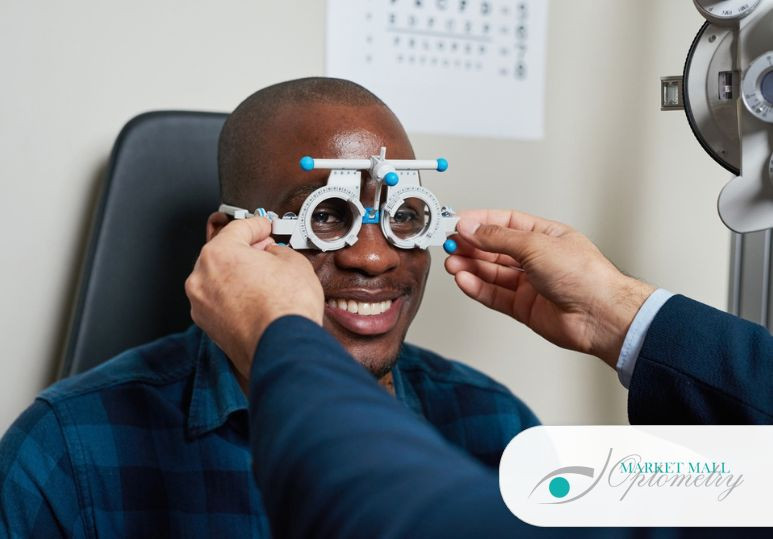
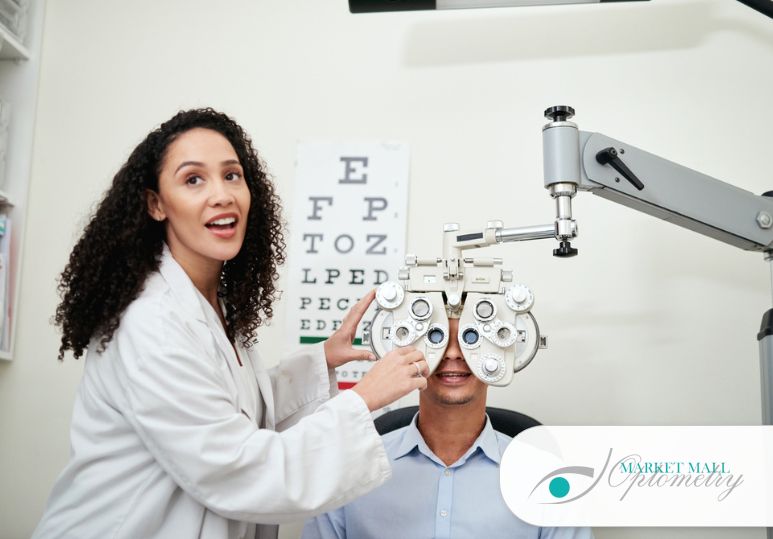
A refraction test determines whether you need a new prescription. You look through a device called a phoropter while the optometrist compares different lenses. You may be asked which option looks clearer. Your answers help refine the prescription used to correct nearsightedness, farsightedness, astigmatism, or age-related changes in near vision.
The optometrist may also test pupil response, focusing ability, eye movement, alignment, and depth perception. These tests assess how effectively your eyes work individually and together. Problems with coordination can contribute to headaches, double vision, reading difficulty, or visual fatigue.
Common early tests include:
- Vision
- Focus
- Tracking
- Pupils
- Alignment
- Depth
Colour vision testing may also be completed when needed. These first steps create a clear picture of how well you see, but a comprehensive exam does not end when your prescription is determined. Clear sight is only one part of healthy vision. The next stage examines the physical condition of your eyes.
HOW IS OVERALL EYE HEALTH CHECKED?
The optometrist examines both the outside and inside of your eyes using specialized equipment. Each instrument evaluates a different structure, and the testing is generally comfortable.
A slit lamp is commonly used to examine the front of the eye under magnification. You rest your chin and forehead against the device while a narrow beam of light is directed toward your eye. This allows the optometrist to assess the eyelids, lashes, tear film, cornea, iris, and natural lens. It can help reveal dry eye, inflammation, infection, corneal damage, cataracts, and other concerns.
Eye pressure may also be measured. This is an important part of screening for glaucoma, although pressure alone cannot confirm or rule out the condition. Some devices release a gentle puff of air, while others use a small instrument near the eye after numbing drops are applied. The test is quick and should not be painful.
The retina and optic nerve at the back of the eye are also evaluated. The retina receives light and converts it into signals, while the optic nerve carries those signals to the brain. Changes in these structures may be associated with glaucoma, macular degeneration, diabetic eye disease, retinal tears, or other conditions.
Digital retinal imaging may be used to capture detailed pictures of the back of the eye. These images create a record that can be compared at future appointments. Tracking small changes over time can help the optometrist identify developing concerns earlier.
Additional testing may include:
- Pressure
- Retina
- Nerves
- Cornea
- Tears
- Fields
Visual field testing measures peripheral vision. You may focus on a central point and respond when lights appear in different areas. This can reveal reduced or missing areas of vision that may not be obvious during everyday activities.
When dryness, redness, burning, or fluctuating vision is present, the optometrist may assess tear quality and eyelid function. Dry eye is not always caused by producing too few tears. Sometimes the tears evaporate too quickly because the oil glands along the eyelids are not working properly. Examining the tear film helps determine which treatment may be suitable.
Dilation may be recommended depending on your symptoms, age, risk factors, and exam findings. Dilating drops enlarge the pupils and allow a wider view of the retina. Close vision may remain blurry, and your eyes may be more sensitive to light for several hours. The optometrist will explain whether dilation is necessary.
These tests are designed to identify both serious disease and smaller concerns affecting comfort or visual performance. A person can see clearly and still have early eye health changes. Regular exams provide an opportunity to find those changes before they become more difficult to manage.
WHAT HAPPENS AFTER YOUR EYE TESTING?
After the exam, the optometrist reviews the findings and explains what they mean. You may be told that your eyes are healthy, or you may receive recommendations based on changes in your prescription, symptoms, or eye health.
If your prescription has changed, the optometrist will explain how an update may improve distance vision, reading, computer use, or comfort. Some patients need glasses only for certain tasks, while others benefit from full-time correction. Progressive lenses, reading glasses, computer lenses, or contact lenses may be discussed based on your lifestyle and visual needs.
Contact lens wearers may need additional measurements because a contact lens prescription differs from an eyeglass prescription. The fit, movement, material, and comfort of the lenses must be assessed. The optometrist may also check the cornea and eyelids for signs of dryness or irritation.
Recommendations may include:
- Glasses
- Contacts
- Drops
- Breaks
- Monitoring
- Referral
Patients with digital eye strain may receive advice about screen distance, lighting, blinking, and regular breaks. Those with dry eye may be advised to use lubricating drops, improve eyelid hygiene, adjust environmental factors, or return for further testing.
If a condition requires monitoring, a follow-up appointment may be scheduled. Repeat imaging, pressure testing, visual field testing, or other assessments can help determine whether a finding is stable or changing.
A referral may be arranged when specialized medical or surgical care is needed. Optometrists work with ophthalmologists, family doctors, and other healthcare providers when additional investigation or treatment is required. A referral does not always indicate a serious diagnosis. It may simply provide access to specialized care.
The optometrist will recommend when to schedule your next comprehensive exam. The timing depends on your age, prescription, eye health, symptoms, family history, and general health. Children, seniors, people with diabetes, and patients with known eye conditions may require more frequent appointments.
Routine exams remain important even when your vision seems unchanged. Many eye diseases develop gradually and may not cause noticeable symptoms at first. Regular appointments create a consistent record of your eye health and make meaningful changes easier to identify.
Regular comprehensive eye exams also give patients an opportunity to ask questions, discuss new symptoms, and better understand how everyday habits may affect their vision and long-term eye health.
Market Mall Optometry provides comprehensive eye care for patients at different stages of life. Through vision testing, eye health assessment, imaging, and clear explanations, the optometrist can provide recommendations based on your needs. Booking regular eye exams supports clear vision, everyday comfort, and long-term eye health.
FAQ's
Q: HOW LONG DOES A COMPREHENSIVE EYE EXAM TAKE?
A: Most comprehensive eye exams take approximately 30 to 60 minutes. The appointment may take longer when retinal imaging, dilation, visual field testing, contact lens measurements, or additional assessments are required.
Q: DO I NEED AN EYE EXAM IF MY VISION SEEMS FINE?
A: Yes. Clear vision does not always mean your eyes are completely healthy. Glaucoma, diabetic eye disease, and some retinal conditions may develop without noticeable early symptoms. Regular exams monitor both sight and eye health.
Q: SHOULD I BRING MY CURRENT GLASSES OR CONTACT LENSES?
A: Yes. Bring your current glasses, sunglasses, or contact lenses, along with a list of medications and relevant health information. These details help the optometrist compare your current correction and provide accurate recommendations.